Most advertisers using Google Ads automated bidding are leaving money on the table. They treat powerful features like portfolio bidding strategy as a "set it and forget it" tool, trusting the platform's defaults. This is a costly mistake. True scalability isn't found in Google's recommendations; it's engineered through a deep, first-principles understanding of how these systems truly work. This guide is for those who are ready to move beyond "best practices" and take back control.
A Portfolio Bid Strategy is not merely a tool; it is an advanced mechanism for scaling profitability while maintaining granular control over campaign performance. Unlike individual campaign bid strategies, portfolio bidding strategy allows advertisers to group multiple campaigns or ad groups under a shared strategy, leveraging collective data for better optimization.
Their importance lies in their ability to align bidding strategy across campaigns with similar goals, thereby capitalizing on Google Ads machine learning algorithms. For businesses managing multiple campaigns, portfolio bidding strategies unlock efficiencies by centralizing data while maintaining flexibility with settings like Maximum Bid Limits.
On the surface, portfolio and individual bid strategies may appear similar since they both leverage Google Ads Smart Bidding. However, the distinction is pivotal. Individual bid strategies apply optimization logic to a single campaign in isolation, risking volatility due to limited data input. Portfolios overcome this limitation by pooling data across campaigns or ad groups with shared objectives. These objectives can range from trying to maximize conversions at a specific Target CPA, to getting the most conversion value possible with a Target ROAS goal. This broader data set enables more precise decision-making by Google Ads auction-time bidding.
At its core, the effectiveness of a portfolio bidding strategy is rooted in a fundamental statistical principle: variance reduction. A single campaign, especially with a limited budget or low conversion volume, is a "noisy" data source with high performance variance. By pooling data from multiple similar campaigns, we create a larger, more stable dataset. This statistical "smoothing" effect allows Google's machine learning models to find more reliable patterns and make predictions with higher confidence, moving from educated guesses to data-driven certainty.
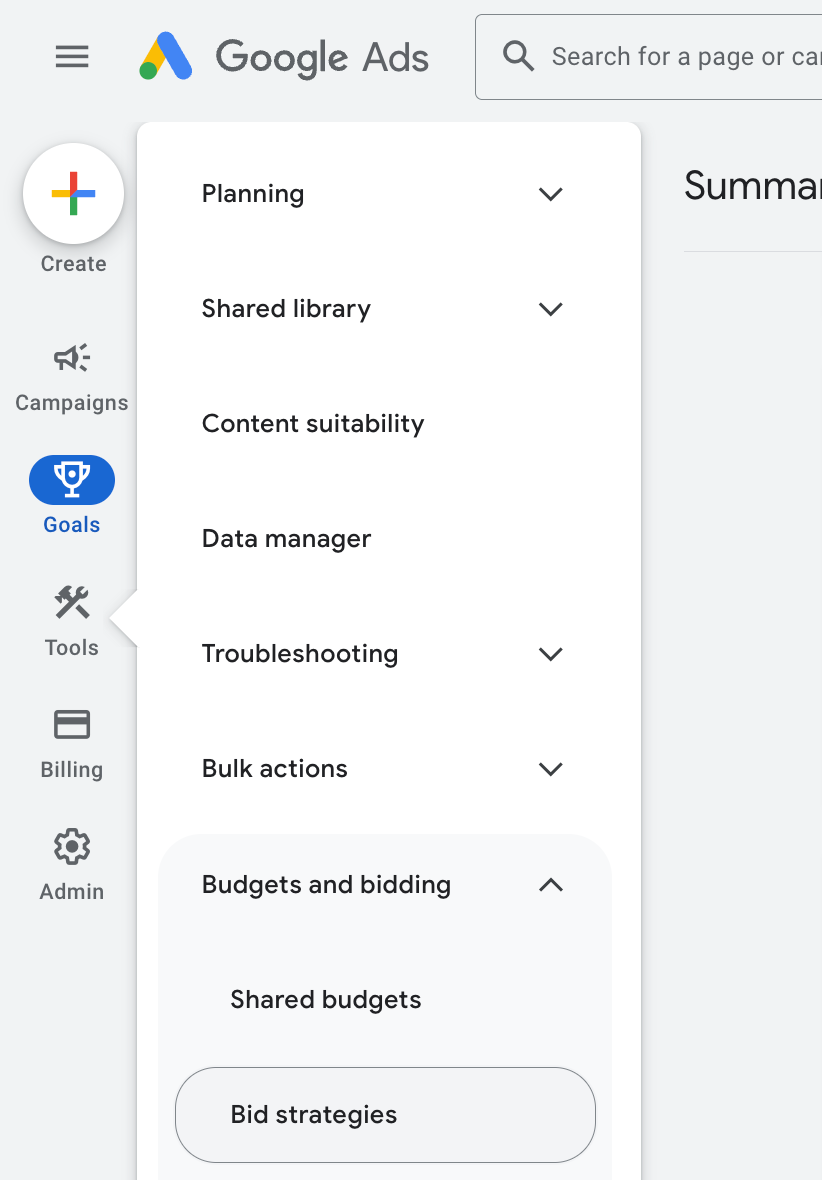
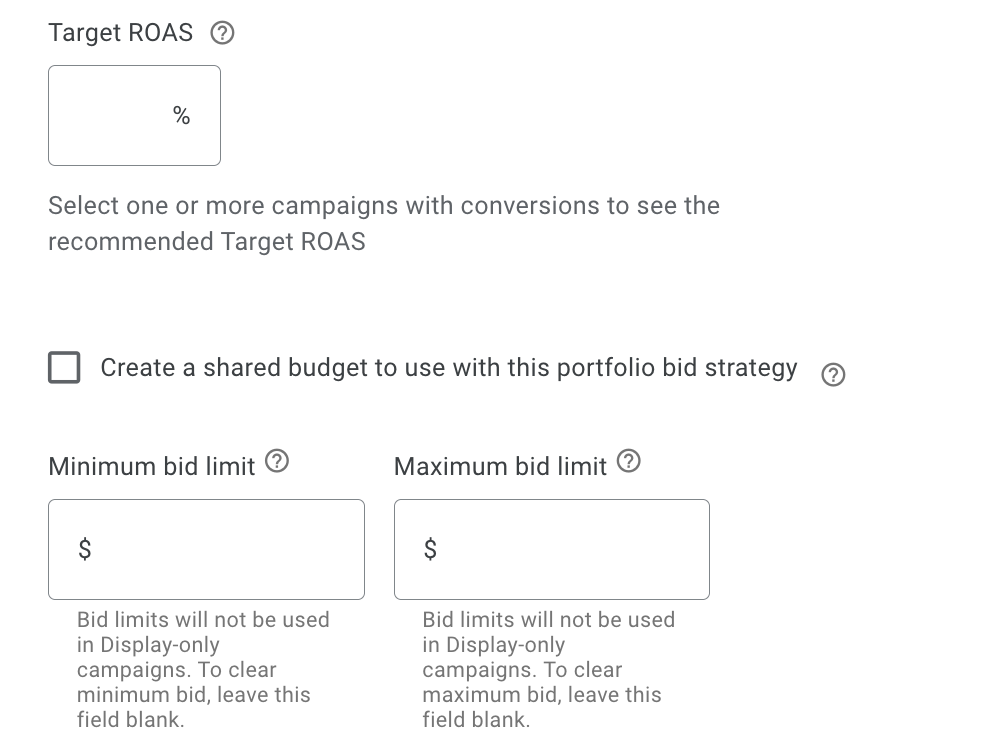
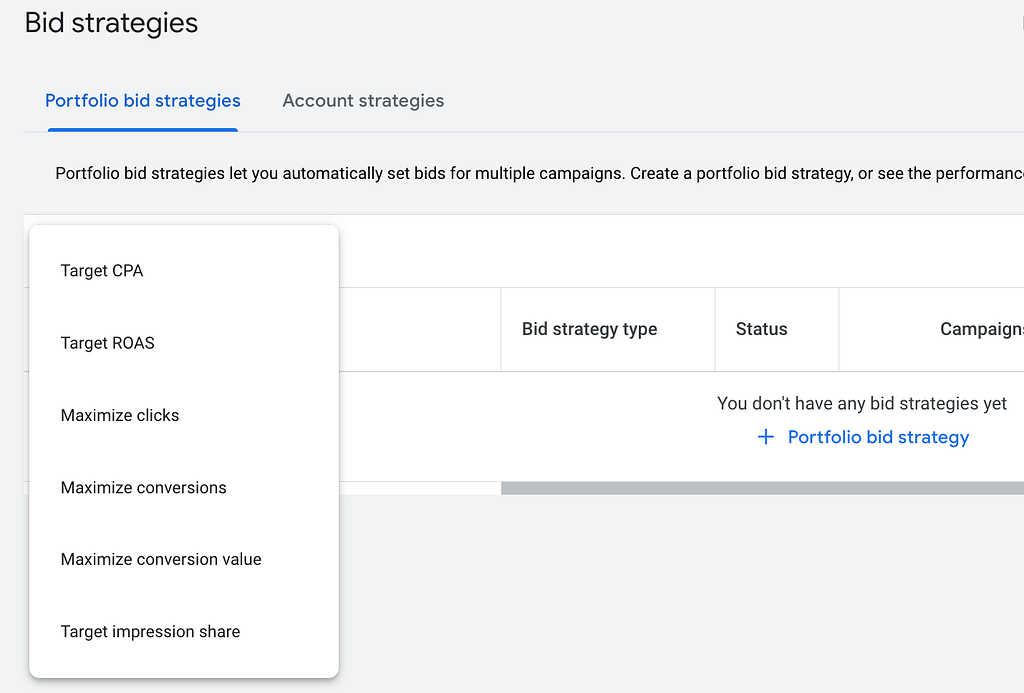
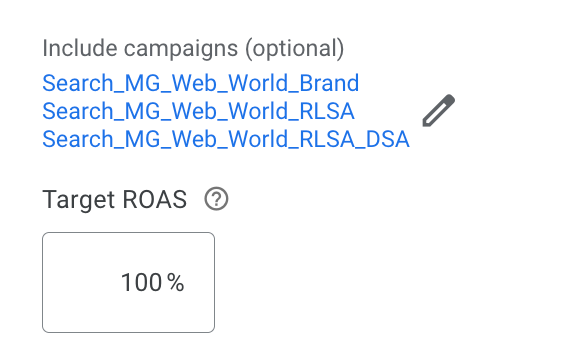
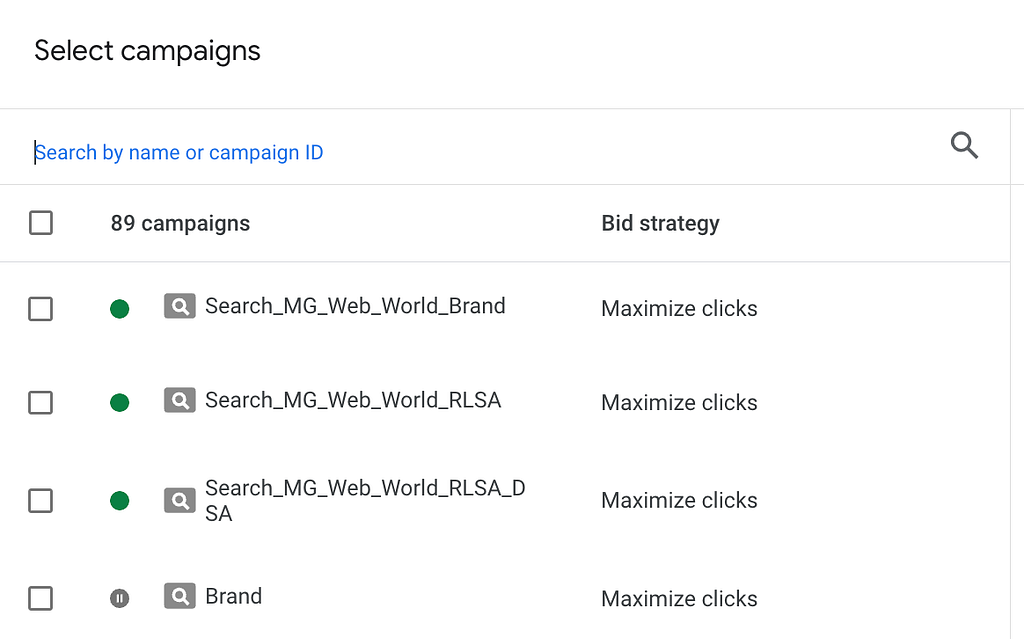
Configuring a portfolio bidding strategy begins by accessing the Shared Library in your Google Ads account. Within the "Bid Strategies" tab (Tools -> Budgets and bidding), click "+ Portfolio Bid Strategy", select your target strategy (e.g., Target CPA, Target ROAS), and assign campaigns or ad groups that share common objectives.
When you create a new campaign, you can immediately add it to an existing portfolio without visiting Shared Library. For accounts with more campaigns, this becomes a routine task. After you set bids and define your parameters, don't forget to click save to apply the changes.
Here's a detailed walkthrough of setup best practices:
Only group campaigns with congruent KPIs. For example, campaigns targeting high-value customers with a Target ROAS > 400% should not be grouped with acquisition campaigns aimed at new users.
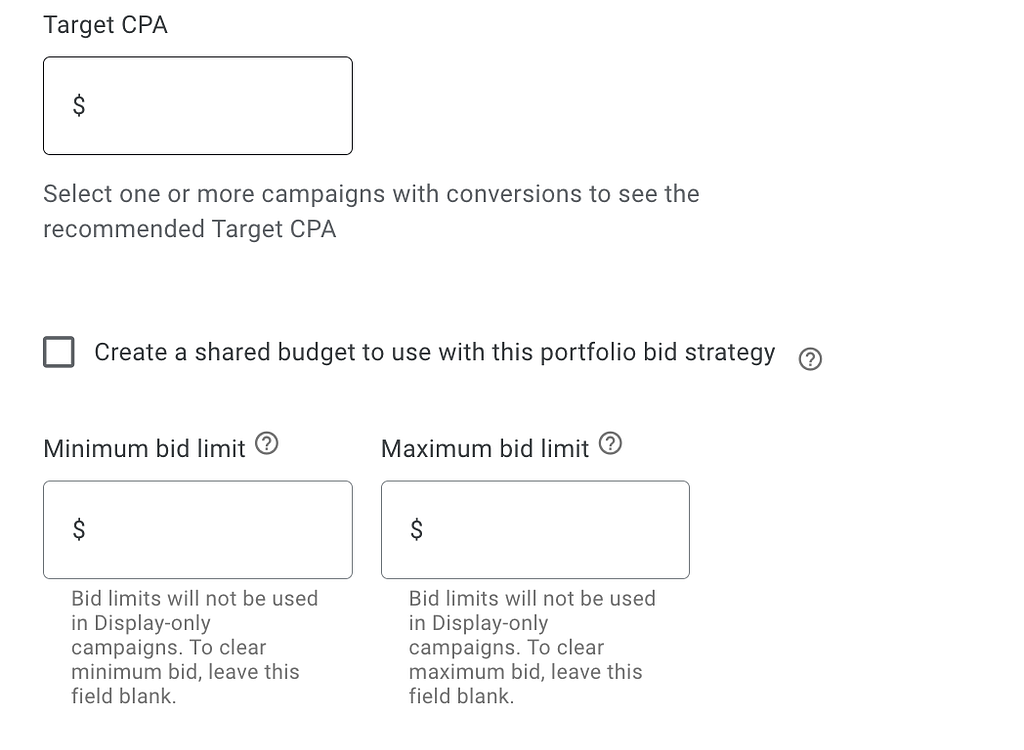
Use Advanced Options to set Maximum CPC Bid Limits (e.g., 3-5x average Cost Per Click) witht target CPA to prevent runaway bids without suffocating the learning algorithm. Research indicates that campaigns with controlled yet flexible bid caps deliver superior ROI.
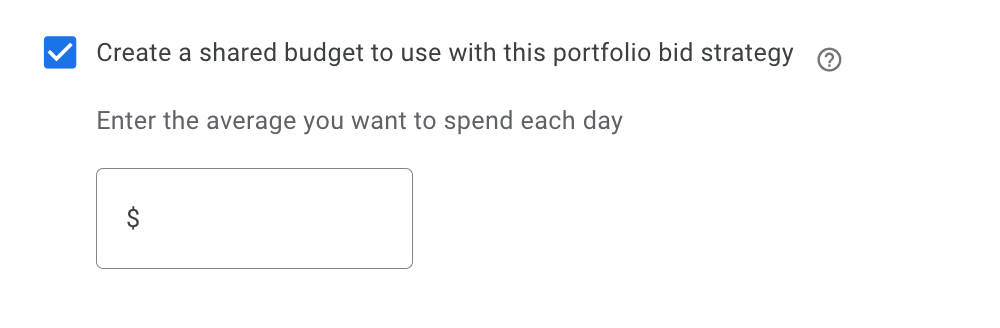
Shared budgets are particularly effective in unlocking greater control, allowing Google Ads algorithms to dynamically allocate spend where performance prospects are strongest. Ensure the shared budget is sufficiently funded to prevent individual campaigns from stalling due to insufficient allocations.
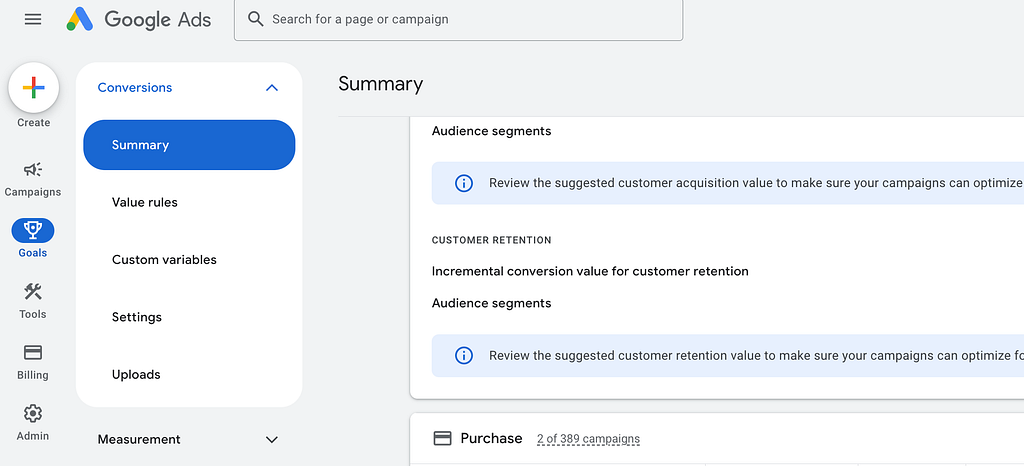
Accurate conversion tracking is non-negotiable for Smart Bidding strategies. Calibrate settings to exclude non-representative conversions, such as low-value signups, from influencing bidding decisions.
Google Ads official documentation emphasizes that portfolio bid strategies require a minimum of 50 conversions across campaigns in 30 days for consistent results. Below this threshold, bid predictions tend to falter, increasing wasted spend.
But what does science tell us?
Despite their power, portfolio bidding are not a universal solution. You should avoid them if:
Traditional campaign-level bidding in the Google Ads account applies settings in isolation, often overfunding poor-performing campaigns or underfunding profitable ones. Portfolio bidding solve this by redistributing budgets dynamically. The ultimate goal is always to achieve the most conversion value for a lower cost. By setting a specific target CPA goal within the portfolio, you provide the algorithm with a clear path to efficiency.
A SaaS company targeting B2B leads across three markets may find that its European campaigns achieve a 25% higher ROAS than their U.S. campaigns. Portfolio bid strategies effortlessly reallocate spend to Europe during high-conversion periods.
Want high traffic on some campaigns while targeting pure profitability on others? Portfolio strategies allow you to set diverse performance goals. One portfolio can be set to get as many clicks as possible using a maximize clicks strategy to drive top-of-funnel traffic, while another focuses on getting as much conversion value as possible with a tROAS strategy. This flexibility allows you to pursue various objectives, from achieving a high target impression share on branded terms to getting as many conversions as possible from your lead-gen campaigns, or even focusing on pure visibility with a Target Impression Share strategy. For e-commerce, the primary goal is often to maximize conversion value.
Statistical Insight: Research recorded a 3x improvement in lead conversion rates when advertisers switched from a campaign-level Maximize Conversions strategy to portfolio-based Target ROAS strategies.
Portfolio bidding strategies aggregate wider datasets, allowing Google Ads bid algorithms to achieve faster, more reliable optimization. This reduces fluctuations, particularly in industries like e-commerce, where demand seasonality skews campaign data.
An Australian apparel retailer utilized Maximize Conversion Value with Target ROAS during its December holiday season campaigns. By consolidating its "Shirts," "Jackets," and "Accessories" shopping campaigns into a single portfolio, they fed Google Ads AI an enriched dataset.
Result? A 15% increase in Sales Volume during Black Friday with a 20% reduction in CPA across product categories.
A B2B SaaS provider targeted IT managers in healthcare (Campaign A), education (Campaign B), and retail (Campaign C) at different CPAs. Through portfolio bidding, they normalized CPA to $45 using shared CTR thresholds while maintaining profitability variance by sector audiences.
Key takeaway here? Use benchmarking across segments, not broad averages.
When campaigns with large budgets dominate smaller-volume but high-impact campaigns, internal cannibalization occurs.
Solution: Create different portfolio bidding strategies for different campaign clusters.
Advertisers frequently struggle with calibrating the right ROAS benchmarks, indirectly starving their budget pipeline.
Solution: Begin with looser ROAS limits (e.g., ROAS > 300%) during learning phases before narrowing to optimal benchmarks (ROAS = 450-600%). Evaluate with 30-day regression analyses.
Google Ads Smart Bidding unlocks nuanced insights like time-of-day or mobile preference data. When layered with portfolio bidding strategies, it allows advertisers to control auction-time behavior within preset thresholds. Check Google's Smart Bidding Documentation. Of course, it's very surface-level, but it gives a general overview of the core concepts.
Enhance portfolio bidding by layering in a specific remarketing audience or other custom segments. This ensures your best bids inside the Google Ads platform are reserved for your most valuable users, helping your ads appear at the absolute top of the Google search results for your most important keywords.
"When multiple campaigns are part of a single portfolio, it means that a better performing campaign can subsidize a worse performing campaign if that helps drive more conversions. Portfolio bid strategies are a good option if you have multiple campaigns that sell similar things with the same target goal."
Frederick Vallaeys, Former Googler and Founder of Optmyzr (in his article for Search Engine Land)
"One of our favorite tactics is to have 3 different portfolio flexible bid strategies for 3 different targets. Scale: This has the lowest ROAS / highest CPA target. Base: Our middle target. High Margin: Our highest ROAS / lowest CPA target. If you're running multiple campaigns with the same goals and targets, throw them onto a portfolio bid strategy."
Collin Slattery, Founder of Taikun (in his post on LinkedIn)
"Smart Bidding is great, but also has flaws. If you're not careful, it will overspend like crazy. The biggest danger of widely adopted automated bid strategies is that Google Ads technically determines all CPC bids. That's why you need a portfolio bid strategy with max CPC bid limits: to take back control and reduce wasted ad spend."
Bob Meijer & Miles McNair from PPC Mastery
"I guess most try Smart Bidding too early - without enough conversion volume. What usually helps: consolidate campaigns so you get more data flowing through a single campaign. Portfolio bidding - kinda the same, but consolidation takes place at the bid strategy level."
Boris Beceric, Google Ads Consultant and Coach (in his article for Search Engine Land)
A Portfolio Bid Strategy is no mere tool in Google Ads toolbox. They are a strategic multiplier for high-stakes advertisers, amplifying optimization efforts while controlling runaway costs. However, their success depends overwhelmingly on thoughtful application, robust data inputs, goal driven bid strategy and clearly pre-defined campaign goals.
If you're battling black box frustrations or scaling inefficiencies, step back, rethink your fragmented Google Ads campaigns, and apply systems thinking with portfolio bidding strategy.
Originally published at https://blog.thedoctorads.com on June 28, 2025.